Category: Digital Parenting & AI Literacy

  • The Conversation Every Parent Is About to Have

    The Conversation Every Parent Is About to Have – Smart Tech Kids
    📱 Digital Parenting & the Creator Economy

    The Conversation Every Parent Is About to Have

    Smart Tech Kids · May 18, 2026 · Digital Parenting & Online Safety
    Child watching YouTube on tablet - Kids and the Creator Economy - Smart Tech Kids

    Your kid wants to be a YouTube star. Inside the two biggest kid channels on the internet — and what their stories actually mean for the rest of us

    It usually starts with a casual question at the breakfast table. A kid looks up from the iPad, mouth full of cereal, and asks: “Mom, can I have a YouTube channel? My friend Mercedes has one and she makes videos and her mom lets her.”

    For a generation of parents, this is the new “I want to be an actor” — except the path looks much shorter, much more accessible, and much more profitable. Your kid has just watched a peer their age open a toy and apparently earn millions of dollars in views and merchandise. Why wouldn’t they want in?

    The honest answer isn’t a flat no, and it isn’t a casual yes. It requires understanding what’s actually happening inside the two channels that have defined this entire genre: Ryan’s World and A for Adley. They look superficially similar — child host, parental management, toy reviews, branded merch — but their origins, business models, and the truths they reveal about modern childhood are very different.

    And both have lessons for any parent staring across the dinner table at a hopeful little face.

    The Two Origin Stories

    ⚡ Lightning vs. Blueprint

    Ryan’s World began as an accident. In 2015, Loann and Shion Kaji — a high school chemistry teacher and a structural engineer — started filming their three-year-old son Ryan simply to share with relatives in Japan. No plan, no production company, no strategy. Just a phone camera and a curious toddler asking his mother, “How come I’m not on YouTube when all the other kids are?” Within four months, the videos exploded. Within a year, they were in YouTube’s top 10.

    A for Adley began as a business plan. Shaun McBride — already a Forbes 30 Under 30 honoree, a pioneer of Snapchat storytelling, and the founder of a media operation called Spacestation — was converting a basement room into a studio before his daughter was born. Adley made her first appearance on his channel at around five months old, in a video that drew 10 million views. She launched her own channel at age two.

    That distinction matters, and most kids miss it entirely. One channel is a story about lightning striking a willing toddler. The other is a story about a media professional doing what media professionals do: building product.

    The Adley your child watches is the daughter of a man who knew exactly how this business worked before she existed.

    Neither path is replicable on demand. One requires luck. The other requires a parent who is already, effectively, a media company.

    The Toy Review Engine — And Why It Worked

    Both channels rose on the same fuel: toy unboxing. The reason wasn’t mysterious. By the mid-2010s, parents were already searching YouTube for product demos before buying. Mattel, Hasbro, and Fisher-Price had massive toy lines competing for attention. A real child, opening real toys, with real reactions, created the most powerful possible form of social proof — far more persuasive to other children than any TV commercial could ever be.

    So the toy companies came calling. Nintendo, among others, reached out to Ryan’s family about collaborations. The first sponsorship era had begun: channels were reviewing toys while being paid by the companies that made them.

    ⚖️ When Regulators Noticed

    In August 2019, the FTC and the watchdog Truth in Advertising filed a formal complaint noting that nearly 90% of Ryan’s videos contained at least one paid product recommendation aimed at preschoolers — an audience too young to distinguish a commercial from a review.

    To a four-year-old viewer, that distinction was invisible. To regulators, it no longer was.

    The COPPA Earthquake

    The bigger shock came one month later. In September 2019, the FTC fined YouTube $170 million for collecting personal data on viewers under 13 without parental consent. The settlement reshaped the entire kids’ content economy in ways most casual users never noticed.

    📋 What Changed for “Made for Kids” Content

    Under the new rules, any video marked “made for kids” immediately lost:

    • Personalized advertising
    • Comments and live chat
    • The notification bell
    • Playlists and the Mini Player
    • Premium CPM ad rates

    For creators, this gutted direct ad revenue overnight. The “kid uploads videos, gets rich on ads” model your child believes still exists… largely no longer does.

    For the Kajis and McBrides, this actually proved their existing strategy was right. Neither family was depending solely on ad revenue anymore. They had already pivoted toward merchandise and licensing — income streams COPPA couldn’t touch. For new entrants, though, the landscape had fundamentally changed.

    From Reviewing Mattel to Competing With Mattel

    The most interesting shift in both channels happens after the toy-review phase. Watch carefully and you can see it: they stop being a YouTube channel and start being a brand.

    📊 The Numbers Behind Ryan’s World

    In 2017, the Kajis signed with PocketWatch, a children’s media startup that took over marketing and merchandise. Ryan’s face went onto products at Walmart and Target. By 2021, Ryan’s World–branded merchandise — toothbrushes, bedsheets, monster trucks, paper plates — generated more than $250 million in revenue, according to The New York Times. The family founded their own production company, Sunlight Entertainment, with a 30-person team producing about 25 videos a week. By 2024, Ryan’s net worth was estimated to exceed $100 million.

    The transformation is worth restating plainly: the channel that began as a kid reviewing Mattel toys is now in direct competition with Mattel.

    Adley’s trajectory followed the same arc, built on her father’s existing Spacestation infrastructure. Spacestation Labs handles merchandise. The family has launched more than 20 YouTube channels in different languages — a globalization move no two-person operation could ever pull off.

    Not everything worked. Ryan’s 2024 feature film Titan Universe Adventure earned just $624,000 on an estimated $10 million budget. Traditional media is a different art form, and the leap doesn’t always land.

    🔎 CATORI NAKAI — The Truth Seeker

    “What you see on screen and what’s actually happening are often two very different things.”

    Catori always reminds kids to ask: Who made this? Why did they make it? What are they not showing me? When your child watches Ryan or Adley, they see a kid having fun with toys. What they don’t see is a production company, a 30-person team, a licensing empire, and a decade of compounding work. Teaching kids to look behind the curtain isn’t cynicism — it’s one of the most powerful media literacy skills they can have.

    The Privacy Trade-Off Nobody Likes to Discuss

    This is the hardest part of the conversation, and it’s where most parents need to sit with some discomfort.

    In Ryan’s case, privacy was an afterthought. The family originally used their real surname, Guan, and filmed openly in their home before adopting the on-screen name Kaji. Now 14, Ryan reportedly wants to spend time surfing and hiking, and parts of the YouTube community have started asking pointed questions about whether a teenager can meaningfully opt out of a multi-million-dollar enterprise that was built around him at age three.

    “Whether that’s a real choice for a child who has spent his entire identity-forming years as the face of a global brand is a question without a clean answer.”

    Adley’s family approached privacy more intentionally — McBride knew the business — but the structural fact remains: she was filmed three weeks after birth, before any concept of consent could exist. From the outside, she looks happy. But the decision was made on her behalf, and it lives on the internet permanently.

    🏛️ The Labor Law Gap

    Most U.S. states have no meaningful legal protections for child YouTube creators. California’s Coogan Law sets aside a portion of a minor performer’s earnings in trust, and a small number of states (notably Illinois) have begun extending similar rules to child influencers — but it remains the exception.

    The default legal reality is that parents own the channel revenue, full stop. Policy is starting to catch up. It hasn’t yet.

    So What Do You Actually Tell Your Kid?

    Here’s the honest answer.

    Your child isn’t imagining “a YouTube channel.” Your child is imagining being Ryan or Adley as they exist today — after the production company, the licensing deals, the merchandise empire, the decade of compounding work, and the luck. That version is not on offer to them.

    The version available to them is: most kid channels get a couple hundred views, the economics have been hollowed out by COPPA, and the privacy decisions you make on their behalf are permanent.

    But the impulse — wanting to create, to be seen, to make something — is healthy. Creativity is the part to honor. Fame and money are the parts to defer.

    🎯 Four Framings That Actually Work

    • Make the videos. Just don’t publish them publicly. A family-only channel, a private cloud folder, an iPad in their room. They can learn the craft without trading away their privacy.
    • If you do publish, treat privacy as a design constraint from day one. First names only. No school uniforms. No house exteriors. No real-time location tells.
    • Decouple the fun from the fame. The actual joy of making something is independent of whether strangers watch it. That distinction is one of the most valuable things a kid can learn early.
    • Build a real off-ramp. If your kid loses interest, the structure of your family shouldn’t punish that decision. Don’t build a business that requires them to keep performing.

    The Bigger Picture

    Ryan’s World and A for Adley are not cautionary tales. They are extraordinary outliers, and the families involved have navigated genuinely difficult terrain with varying degrees of thoughtfulness. They’ve made remarkable amounts of money. They’ve also made permanent decisions on behalf of children who couldn’t consent — and those decisions are now permanent features of those children’s lives.

    What your kid is really asking, when they ask to start a channel, is whether they can be seen. That’s an old question, and it predates YouTube by a few decades. The new part is that the answer can now be commercialized at scale, sometimes spectacularly, and almost always at a cost that’s hard to see clearly when you say yes.

    💡 The Informed Parent’s Job

    The informed parent’s job isn’t to say no. It’s to make sure the version of yes they say is one their child can still walk away from.

  • It’s Time We Teach Kids What Actually Runs Their World

    It’s Time We Teach Kids What Actually Runs Their World

    It’s Time We Teach Kids What Actually Runs Their World – Smart Tech Kids
    🎓 AI Education & Digital Literacy

    It’s Time We Teach Kids What Actually Runs Their World

    Smart Tech Kids · March 18, 2026 · AI Education & Advocacy
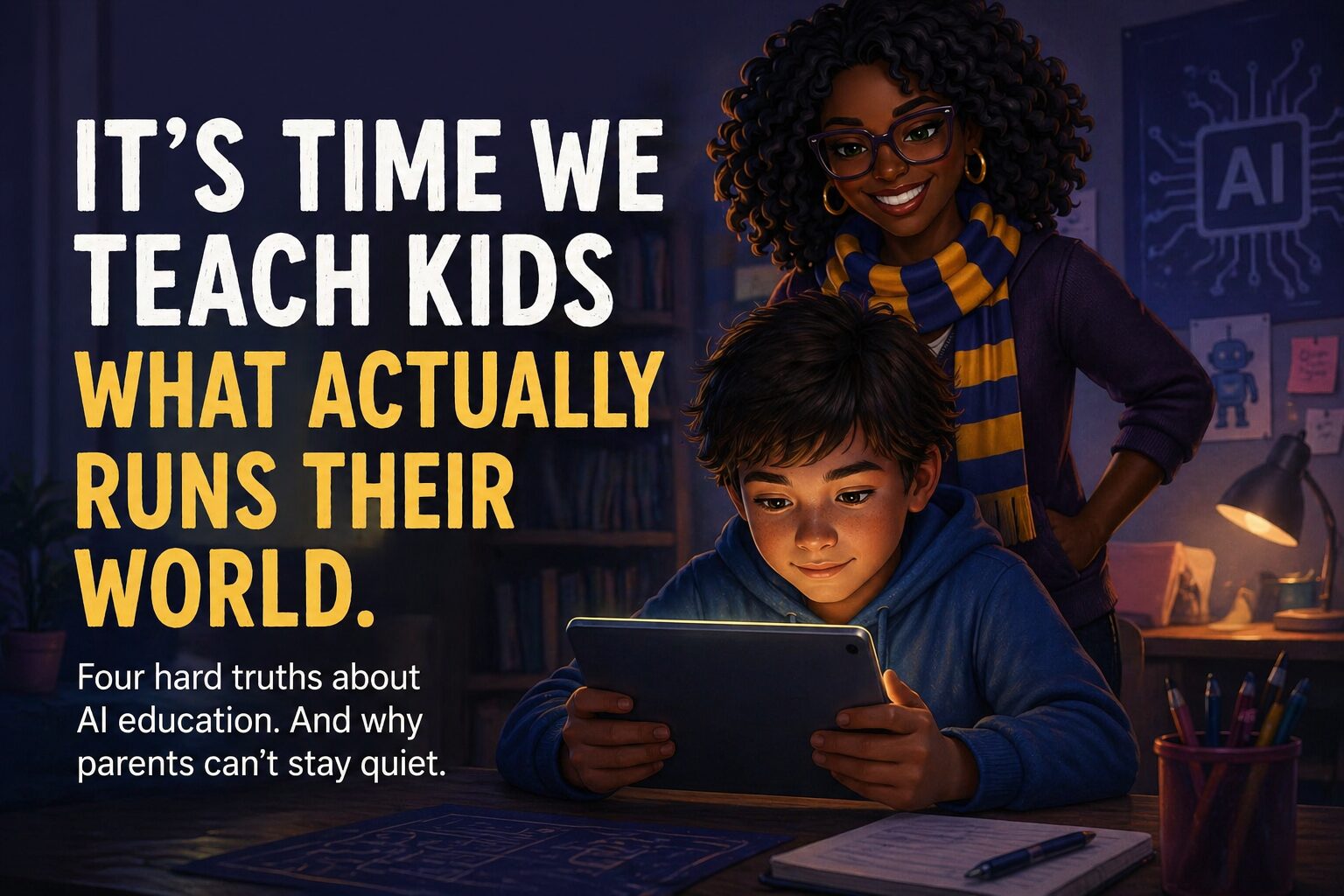
    AI Education Gap - Smart Tech Kids

    It’s past time for a holistic approach to AI education — and as parents, we can’t afford to stay quiet

    There’s a quietly growing gap opening up in our schools and for the most part parents don’t know it’s there.

    On one side of the gap: the world your child is actually living in, one increasingly shaped, sorted, and decided by artificial intelligence. AI curates what they see online. It influences what colleges or employers might one day notice about them. It powers the tools they’ll be expected to use in virtually every professional field within a decade. AI is no longer ‘coming,’ it arrived on the early train, and it’s been embedded into daily life.

    On the other side of the gap: the curriculum most schools are still delivering, largely unchanged in structure, lightly grazing the feet of the AI juggernaut, barely introducing kids to terms that are already outdated. Unsure of whether to even lean into this new technology with so many different opinions on its usefulness, ethical existence and possible environmental threat.

    ⚠️ This Isn’t Blame — It’s a Structural Challenge

    I am not laying blame or criticizing teachers or administrators, not meant to make anyone feel bad. The vast majority of educators are working incredibly hard, often with inadequate resources and shifting expectations. I am talking about a structural challenge. A challenge that requires an honest look at what’s not working and a public conversation about what needs to change.

    So let’s have it.

    Challenge One: We’re Building the Plane While Flying It

    Before we can fix AI education, we have to be honest about one foundational problem: we don’t yet fully know what good AI education looks like.

    The research on long-term learning outcomes for AI literacy programs is still emerging. What concepts should be introduced at age seven versus age fourteen? What teaching methods produce lasting understanding versus shallow familiarity? Which approaches actually close opportunity gaps rather than widening them? These are open questions, and they’re not trivial ones.

    This isn’t a reason to throw up our hands. Plenty of pioneering educators, researchers, and organizations are doing genuinely thoughtful work to answer these questions. But it does mean that much of what’s being rolled out in classrooms right now is operating without the evidence base that we’d expect for any other major curriculum initiative.

    Think About Other Curricula

    Think about how carefully literacy programs, math frameworks, or science standards are typically evaluated and revised. AI education needs that same institutional rigor, and it needs the funding and political support to build it quickly.

    For parents, the concrete ask: advocate for evidence-led curriculum development. When your school district or state board announces an AI program, ask what research it’s grounded in. Ask how outcomes will be measured and reported. These are reasonable questions, they aren’t aggressive questions and asking them signals that parents are paying attention.

    Challenge Two: The Textbook Is Always a Step Behind

    There’s a huge paradox that anyone working at the intersection of education and technology has had to grapple with: the very nature of AI makes it extraordinarily difficult to teach in traditional institutional settings.

    📚 The Speed Mismatch

    Education systems are built for stability. Curricula are developed over years, piloted, evaluated, approved, and then rolled out. This process can easily take half a decade from concept to classroom.

    AI, by contrast, evolves in months. The tools that were cutting-edge when a curriculum was drafted may be genuinely obsolete by the time a student encounters them.

    This is more than an inconvenience; it creates a structural mismatch that threatens to make even well-intentioned AI programs feel irrelevant to students almost immediately.

    I believe we need to rethink what we’re teaching. The goal shouldn’t be to teach specific AI tools or systems, since those will change. It should be to build durable, foundational understanding:

    • How does machine learning work conceptually?
    • How is data used and potentially misused?
    • How do algorithmic systems make decisions, and what are the ethical dimensions of those decisions?

    We shouldn’t abandon structured learning, we need to think through what the foundation looks like and what the pretty flowers in front look like.

    These questions remain relevant regardless of which tools or platforms rise or fall. Principles age well. Platforms don’t.

    For this to work, curriculum frameworks can’t be locked into the same old five-year review cycles, they must be designed for regular iteration. That requires policy flexibility and funding commitment at both state and national levels. It also requires teachers who feel empowered to adapt and update, rather than rigidly follow a script.

    🤖 ALEX CHEN — The AI Explorer

    “AI isn’t magic. It’s math, data, and patterns. Once you understand how it works, you can work with it — not just for it.”

    Alex teaches kids that understanding the principles behind AI is more powerful than knowing any specific tool. When you understand how machine learning actually works, you can spot its limitations, question its outputs, and use it as a collaborator instead of treating it like an oracle. That understanding doesn’t expire when the next version launches.

    Challenge Three: We Can’t Teach What We Don’t Know

    Let’s talk directly about the people at the center of all of this: teachers.

    The expectation that educators will confidently, meaningfully and smoothly integrate AI into their classrooms in ways that are pedagogically sound is, for many of them, an unfair one. Not because teachers aren’t capable. But because most of them were never taught this themselves.

    👨‍🏫 The Teacher Readiness Gap

    Professional development in AI is inconsistent at best, nonexistent at worst. Many teachers report feeling underprepared and unsupported when it comes to technology-integrated teaching.

    Imagine being asked to coach a sport you’ve never played, in front of students who are already practicing on their own at home. That’s the position many educators are in right now.

    The teacher readiness gap isn’t a teacher problem, instead it’s a systemic investment problem. We all know that meaningful professional development takes time, expertise, and sustained funding. It requires ongoing support, and more than a single high level one-day workshop. And it requires treating educators as professionals capable of growing into new domains which we need to give them the time and resources to do so.

    For parents and community members, this is a place where advocacy matters enormously. School boards and state legislatures make decisions about professional development budgets. Those decisions are influenced by constituent priorities. When parents make teacher training a visible, vocal priority, it moves up the agenda.

    Challenge Four: The Gap That Could Define a Generation

    Of all the challenges I’ve discussed so far, I feel like this one carries the most long-term consequence: AI education risks becoming yet another axis along which children’s opportunities are determined by their zip code.

    The Opportunity Divide

    Schools in well-resourced districts are most likely those with larger budgets, stronger technology infrastructure, more staff capacity and are therefore better positioned to develop thoughtful, integrated AI literacy programs. They can afford to bring in specialists, invest in professional development, and pilot new curricula.

    Schools in under-resourced communities often can’t. They’re already managing larger class sizes, older equipment, higher rates of teacher turnover, and tighter budgets. And then strap on the strained plastic bag of AI education to the list of things they’re expected to do, no extra time, no extra pay, no real professional prep, i.e., no support.

    This is a recipe not for inclusion, but for another new and widening divide.

    Fact is the stakes here are significant. If AI literacy becomes a differentiator for college admissions, career opportunities, and civic participation, and based on the current job market, there’s every reason to believe it will, then children who don’t receive it are missing more than just a subject. They’re missing a key to navigating the world they’ll inherit.

    ⚖️ A Policy Failure We Can Prevent

    Luckily, this is a policy failure we can prevent, but only if we name it directly and address it immediately. Equity in AI education isn’t a “nice to have,” it’s the central moral and economic argument for a national strategy.

    That strategy needs to include:

    • Targeted investment in under-resourced schools
    • Culturally responsive curriculum design
    • Community-based approaches to AI literacy beyond the classroom
    • Accountability mechanisms that ensure programs actually reach the students who need them most

    What Parents Can Do Starting Today

    These four challenges — building evidence-based curricula, keeping pace with rapid change, supporting teacher readiness, and ensuring equitable access — are interconnected. Progress on any one requires progress on all.

    But here’s what gives me hope: when parents understand what’s at stake, they become powerful advocates for change.

    🎯 Concrete Actions for Parents

    • Ask questions at school board meetings. What AI curriculum is being used? What research supports it? How are teachers being trained? How will outcomes be measured?
    • Support teacher professional development budgets. Make it clear to your district that investing in teacher training is a priority for your family.
    • Advocate for equity. Ask how AI education programs will reach all students, especially those in under-resourced schools.
    • Fill the gap at home. While we work for systemic change, teach AI literacy at home. Use resources like Smart Tech Kids to build understanding together.
    • Connect with other parents. You’re not alone in caring about this. Build community around these questions.

    The world our children are inheriting is increasingly shaped by AI. The question isn’t whether they’ll encounter it — they already have. The question is whether they’ll understand it well enough to navigate it with agency, ethics, and opportunity.

    That education shouldn’t depend on their zip code. And it can’t wait for the perfect curriculum to emerge. We need to start now, with what we know, while we build what we need.

    It’s time we teach kids what actually runs their world.

    0 comments

    Leave a comment

    Please note, comments need to be approved before they are published.

    –>
  • What Apps Really Know

    What Apps Really Know

    What Every App Knows About Your Child – Smart Tech Kids
    🔐 Digital Parenting & Data Privacy

    What Every App Knows About Your Child — And Why Your Family’s Data Is Worth Fighting For

    Smart Tech Kids · March 15, 2026 · Data Privacy & Security
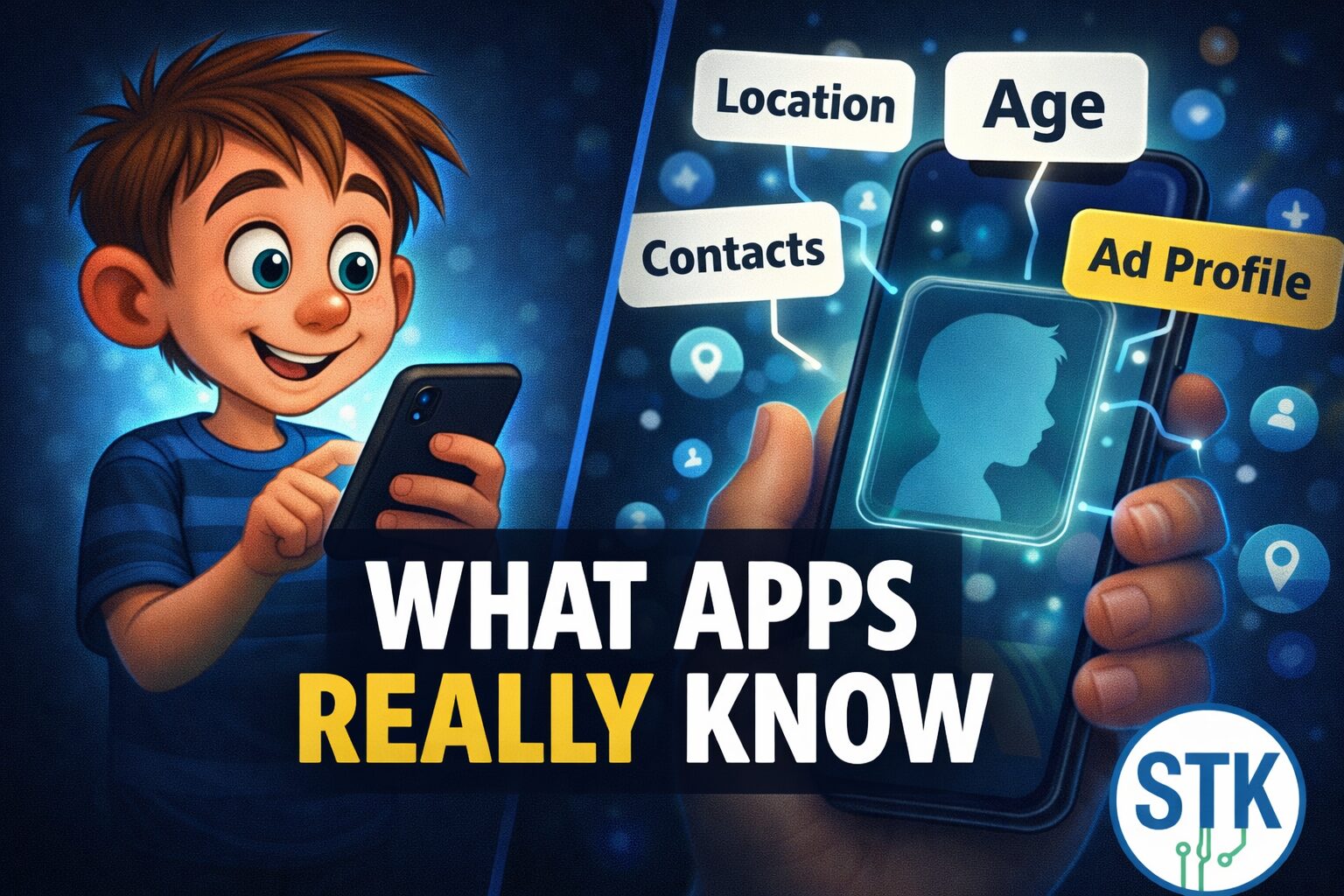
    What Apps Know About Your Child - Smart Tech Kids

    Understanding the invisible data economy your children live inside

    There is a moment, familiar to most parents, when you hand a phone to a child and feel a vague, unnamed unease. You can’t quite articulate it. The app looks harmless. Your child is happy. Nothing obviously dangerous is happening.

    That unease, it turns out, has a name. It’s intuition catching up to a reality most of us haven’t fully examined: that the digital spaces our children inhabit are not neutral playgrounds. They are, in large part, commercial infrastructure — and our children’s attention, behavior, and personal information are the raw material that keeps the whole system running.

    This isn’t about panic or cynicism. It’s about understanding the system clearly, because the families who understand it are the ones with real agency inside it.

    The Invisible Exchange

    Every interaction a child has with an app involves an exchange. The child gets something — a video, a game level, a chat with a friend. The app gets something too, and that something is data.

    Some of this data is obvious: name, email address, date of birth. But the more commercially valuable data is behavioral — and it is collected continuously.

    What a Single Session Generates

    Consider what a single session on a popular video platform might collect:

    • Which videos were watched to completion and which were skipped
    • How long the user paused before making a selection
    • What time of day they were active
    • Their approximate location
    • What device they were using and what other apps shared that device

    This information, aggregated across millions of users, allows platforms to build remarkably precise models of individual preference, emotion, and vulnerability.

    For children, the picture is even more detailed. Because children’s usage patterns are often more habitual and less varied than adults’, their behavioral data is in some ways more predictable — and therefore more useful to advertisers building long-range targeting models.

    Why Children’s Data Commands a Premium

    It may seem counterintuitive that a child’s data — from someone with no income and limited purchasing power — would be particularly valuable to advertisers. The explanation lies in the concept of lifetime value.

    💰 The 60-Year Customer

    A child who begins engaging with a platform at age eight is a potential customer for the next sixty or seventy years. The habits, preferences, and brand associations formed in childhood are among the most durable in consumer psychology.

    Acquiring data on a young user is, from a commercial perspective, an investment in decades of future influence.

    This is why the children’s app market attracts such significant advertising spend, and why the data protection landscape for minors has become a contested regulatory battleground in virtually every major economy.

    The Regulatory Picture — And Its Limits

    Meaningful protections exist, but they have meaningful limits.

    ⚖️ Current Privacy Laws

    In the United States: The Children’s Online Privacy Protection Act (COPPA), first passed in 1998 and updated in 2013, prohibits the collection of personal data from children under thirteen without verifiable parental consent.

    In the United Kingdom: The Age Appropriate Design Code requires platforms likely to be accessed by users under eighteen to build privacy protections into their default settings.

    In the European Union: The GDPR includes provisions for children, generally setting the age of digital consent at sixteen, with member states permitted to lower this to thirteen.

    These are meaningful protections. But age verification online remains technically difficult and politically contentious. The most common enforcement mechanism — asking users to confirm they are above the minimum age — is trivially circumventable.

    The regulatory frameworks are catching up. They are not yet caught up.

    Inside the “Free” App Economy

    The phrase worth internalizing is this: if the product is free, you are the product.

    It’s a cliché in technology criticism — but clichés earn their status by being repeatedly true. Here’s the chain:

    • Free apps generate revenue through advertising
    • Advertising effectiveness is driven by targeting precision
    • Targeting precision requires detailed user data
    • User data comes from tracking behavior

    The chain is direct and intentional.

    📡 Third-Party Trackers

    What is less widely understood is the degree to which this data flows beyond the app that collects it. Third-party advertising networks, analytics companies, and data brokers all receive fragments of user data through code embedded in apps — sometimes called trackers or SDKs (software development kits).

    A single free mobile game may contain ten or more of these embedded trackers. Each one is a conduit for behavioral information flowing outward to companies the user has never heard of.

    Research by organizations focused on app transparency has found trackers embedded in apps explicitly marketed for young children — including apps appearing in “educational” and “learning” categories in major app stores.

    🔎 DAVID COOPER — The Security Expert

    “Privacy isn’t about having something to hide. It’s about having something to protect.”

    David always reminds families: your child’s data today becomes their digital footprint tomorrow. What feels like a harmless game download now can follow them into college applications, job searches, and beyond. The best time to protect their data? Before it’s collected.

    What Data Brokers Do With What They Receive

    Data brokers are the least visible and least understood part of this ecosystem. Their business is the acquisition, aggregation, and resale of personal information — sourced from apps, websites, loyalty programs, public records, and a wide range of other inputs.

    The profiles they build can be extraordinarily detailed: not just basic demographics, but inferred characteristics like household income range, health conditions, relationship status, political leanings, and behavioral tendencies. These profiles are sold to marketers, insurers, employers, and — in some documented cases — individuals with less benign intentions.

    For children, the long-term implications of a detailed behavioral profile established in childhood are difficult to predict and nearly impossible to retroactively erase.

    Data, once collected and distributed across multiple brokers and buyers, does not disappear. It persists — and it follows the person it describes.

    Five Concrete Actions Families Can Take

    Understanding the problem is the first step. Acting on that understanding is the second. Here are five meaningful actions — ranked roughly from immediate to ongoing.

    1️⃣ Conduct a Permission Audit This Week

    Go to your device settings and review what permissions each installed app holds. Look specifically at location, microphone, camera, and contacts. Revoke any permission that doesn’t have an obvious, necessary connection to what the app actually does. This is one of the highest-impact privacy actions available to any user.

    2️⃣ Use Privacy Labels Before Downloading

    Apple’s App Store and Google Play both display privacy summaries for apps. Before your child downloads something new, spend sixty seconds reviewing what data it collects and whether any of it is linked to their identity. If the disclosure is unusually long or includes categories like “browsing history” or “sensitive info,” investigate further before proceeding.

    3️⃣ Turn Off Ad Tracking at the Device Level

    On iPhone: Settings → Privacy & Security → Tracking → disable “Allow Apps to Request to Track.”

    On Android: Settings → Privacy → Ads → select “Delete advertising ID.”

    These settings don’t eliminate data collection entirely, but they significantly reduce the ability of advertisers to build cross-app behavioral profiles.

    4️⃣ Choose Paid Over Free for High-Frequency Apps

    When a child uses an app daily — for schoolwork, creative expression, communication — consider whether a paid version exists. Paid apps have a fundamentally different revenue model. They don’t need to monetize attention, because the transaction is already complete. The investment in a paid app is often modest relative to the privacy dividend it provides.

    5️⃣ Build Data Literacy Into Regular Family Conversation

    Audit your own app usage together. Ask your child what they think apps know about them. Explain, in age-appropriate terms, how advertising works and why it needs information to function. Children who understand the underlying mechanics of the digital economy they inhabit are not just better protected — they are better prepared for adult life in a data-driven world.

    The Bigger Picture

    It’s tempting to frame conversations about children’s data privacy as a problem to be solved by better regulation, or by more responsible technology companies, or by improved parental controls. All of those things matter. Advocacy for stronger legal protections, transparency requirements, and corporate accountability is valuable and necessary.

    But at the household level, the most durable protection is educated awareness.

    🎯 Privacy as Agency

    A child who understands that their attention is a commodity — that their habits, preferences, and behavioral patterns have real commercial value, and that surrendering them is a choice rather than a default — is a child equipped to navigate the digital world as a participant, not merely a subject.

    Privacy, at its core, is an expression of agency. It is the capacity to determine what you share about yourself, with whom, and under what conditions. Teaching children that this capacity exists, that it matters, and that it is worth exercising is not a technical conversation. It is a values conversation.

    And those, fortunately, can happen anywhere — including at the dinner table tonight.

  • Gaming Without the Drama: A Parent’s Guide Part 3

    Gaming Without the Drama: A Parent’s Guide Part 3


    Gaming Without the Drama: A Parent’s Guide, Part 3 | Smart Tech Kids

    Gaming Without the Drama · Part 3 of 3

    Gaming Without the Drama:
    A Parent’s Guide, Part 3

    Most kids are motivated by challenge and connection —
    not addiction. Here’s how to tell what’s really going on.

    📅 November 2025
    ⏱ 6 min read
    Digital Parenting
    Gaming Safety
    In-Game Purchases
    Child in adventure gaming mode illustration — Smart Tech Kids gaming guide for parents


    📌 Quick Takeaways
    • Passionate play ≠ addiction. Long gaming sessions don’t automatically signal a problem.
    • Look for patterns, not dramatic moments. One meltdown doesn’t equal addiction — but constant ones when asked to stop might.
    • Healthy gamers stay balanced. They finish homework, keep offline hobbies, and can stop without extreme distress.
    • Watch for real-life withdrawal. Skipping meals, losing sleep, lying about gaming time, and abandoning previous interests are red flags.
    • Collaboration beats control. Building boundaries together is far more effective than imposing strict rules.
    This week’s action: Download our Family Gaming Contract template and customize it together with your child — that word “together” is the whole point.

    🎮

    Gaming Addiction vs. Healthy Play: Know the Difference

    The line between passionate, healthy gaming and problematic play isn’t always obvious — and many parents mistake intensity for addiction. Kids who love gaming often experience deep focus, social connection, and a real sense of achievement. That’s not a problem. What is a problem is when gaming begins replacing, rather than supplementing, the rest of life.

    One explosive moment when you call time doesn’t tell the whole story. A child who struggles to disengage every single time, who lies about how long they’ve been playing, or who has quietly stopped caring about everything else they used to love — that’s a different conversation.


    💸

    In-Game Purchases: When “Free” Costs a Fortune

    The Psychology Behind the Purchase

    Variable ratio reinforcement — the same psychological mechanism that makes slot machines addictive — is deliberately built into loot box systems. When your child pays to unlock a random virtual item, their brain’s reward center activates in exactly the same way it does with gambling.

    Game designers know this. The mechanics are intentional.

    Here’s what that looks like in the games your kids are actually playing:

    Fortnite
    $85/yr avg
    Battle Pass + V-Bucks for skins, emotes, and dances
    ⚠ Pressure Point
    “Limited-time exclusive items — Buy now or miss out forever!”

    Roblox
    $110/yr avg
    Robux for avatar items, game passes, developer products
    ⚠ Pressure Point
    Peer comparison — everyone can see your avatar’s items

    Minecraft
    $45/yr avg
    Minecoins for marketplace content and Realms subscriptions
    ⚠ Pressure Point
    Multiplayer server access and expansion pack gatekeeping


    🧒

    Age-Specific Guidance

    🌱

    Elementary School
    Ages 6–11

    What’s Happening

    Kids this age are just entering the online gaming world. They’re excited, trusting, and don’t yet have the risk-assessment skills to recognize danger. If someone online says “I’m 10,” they believe it. They take people at their word — because that’s developmentally appropriate for their age. Your job is to be nearby, not hovering, but present.

    What You Can Do
    • Keep all gaming in shared spaces — living room, not bedroom
    • Friend lists must be real-life friends only
    • Voice chat stays OFF
    • Sit nearby periodically: listen and watch
    • Use parental controls to restrict spending and contact
    • Watch them play sometimes — ask questions, show genuine interest
    • Teach: “If anyone asks personal questions, tell me immediately”

    🔭

    Middle School
    Ages 12–14

    What’s Happening

    Gaming is their social life now. They’re navigating online friendships, peer pressure to have the right avatar items, and figuring out who they can actually trust. They want more independence — and they’re ready for more — but significant guidance is still essential. This is when conversations matter most, not restrictions.

    What You Can Do
    • Voice chat OK with real-life friends; online-only friends must be met in-game first
    • Spot-check friend lists and conversations periodically — with their knowledge this is your policy
    • Create a monthly gaming budget they manage themselves
    • Involve them in setting their own screen time limits
    • Watch for gaming interfering with sleep, school, or real relationships
    • Have the online predator conversation clearly and directly — not scary, but honest
    • Teach critical thinking about in-game purchase psychology and manipulation tactics


    📋

    This Week’s Action: Create Your Family Gaming Contract

    Time required: 20–30 minutes · Best time: Family meeting or Sunday evening

    1. Download our Family Gaming Contract template (link below)
    2. Schedule a family meeting and bring snacks — make it an event
    3. Fill it out together. Their input matters as much as yours
    4. Both parent and child sign it. This makes it real and mutual
    5. Post it somewhere visible. The fridge works. The bedroom door works
    6. Set a reminder to review it in 2 weeks. Agreements need revisiting
    Make it work — make it fun
    • Let your child decorate the contract — ownership matters
    • Include a “reward” section for consistent self-regulation
    • Build in flexibility (“Special event weekends get +1 hour”)
    • Add their input on consequences — they’re often stricter on themselves than you’d be
    When kids help create the rules, they’re invested in following them. This isn’t your gaming policy. It’s your family’s gaming agreement. That’s a huge difference.

    Get Your Free Resources

    Download the conversation scripts and Family Gaming Contract template — ready to customize tonight.


    Download Free Scripts & Contract

    Join the Conversation

    We want to hear what’s actually happening in your house — because your experience shapes the next piece of content we create.

    Quick poll — reply in the comments:
    • A Gaming is a constant battle in our house
    • B We’ve found a decent balance
    • C Gaming isn’t really an issue for us yet

    Share your story and tag us:

    #SmartTechKids

    Subscribe to the newsletter for weekly digital parenting tips and new activities, or connect with us on Facebook and Instagram — we read every message.

  • Gaming Without the Drama: A Parent’s Guide Part 2

    Gaming Without the Drama: A Parent’s Guide Part 2

    85% of kids ages 8-14 play online games regularly but only 16% of parents know who their kids are talking to while playing.

    • Voice chat isn’t just kids talking to friends. Adults, teens, and strangers often share the same channels as your child.
    • Most games default to “everyone” chat, not “friends only.” Your child may be broadcasting to strangers without realizing it.
    • Bullying, grooming, and inappropriate language happen in voice chat. Real-time conversation creates unique risks that text chat doesn’t.
    • Kids accidentally share personal information. In casual conversation, they may reveal their real name, age, school, or location.
    • Simple settings changes dramatically improve safety. Learning to mute, block, and report empowers your child to protect themselves.

    This week’s action: Check your kids game settings!


    Friend or Rando?

    Your 10-year-old is playing Fortnite, chatting cheerfully with their “squad.” You hear laughter and excited strategy talk. It sounds harmless, like some healthy social interaction.

    Unfortunately, what many parents don’t realize is that those voices your child is chatting with might NOT be other 10-year-olds.

    They could be teenagers, college students, or adults. Some are genuinely kind players helping younger gamers. Others? Not so much. The in-game content settings are often set by the developers, and you would be surprised to know that they believe mild violence is perfectly appropriate for kids aged 7 and under.

    Voice chat has become the new frontier of online safety, for some reason, more and more games are offering the ability for voice chats, likely because the typing chat feature is much slower for kids who cannot spell or who are just learning and are very slow. Kids now a days are quite socially savvy and speak at a higher level more often than not. And truth is, most parents are navigating it blindly.

    Here’s how it works in popular games:

    Understanding How Voice Chat Actually Works

    Unlike text chat that you can monitor by reading message history, voice chat happens in real-time and leaves no record. And it comes in many different varieties:

    Open vs. Friends-Only Chat
    Most games default to “open team chat,” meaning your child can hear and talk to anyone on their team — including complete strangers. “Friends only” chat restricts communication to approved contacts.

    Party Chat vs. Game Chat
    “Party chat” is typically a private group your child creates. “Game chat” or “team chat” includes whoever is randomly matched with them in that game session.

    Proximity Chat
    Some games use proximity chat where players can only hear others who are nearby in the game world. This means unknown players can “approach” your child to start conversations.

    No Age Verification
    Games rarely verify ages or separate children from adult players. Your 8-year-old could be matched with a 28-year-old, with no indication of the age difference.

    The Real Risks of Voice Chat

    To be fair: a lot of online gaming interactions are harmless. But the risks are real enough that every parent should understand them especially with less mature or at-risk youth:

    1. Bullying and Toxic Behavior
    The anonymity of online gaming brings out the worst in some players. Kids experience:

    • Aggressive trash talk and insults
    • Targeted harassment based on voice (young kids, girls)
    • Being blamed or screamed at for mistakes in-game
    • Exclusion and social manipulation

    2. Inappropriate Language and Content
    Many online players use profanity, sexual language, or discuss inappropriate topics. Young children are exposed to language and concepts they’re not ready for.

    3. Grooming Behavior
    Predatory individuals use gaming voice chat to:

    • Build trust through friendly gaming sessions
    • Ask personal questions gradually
    • Request off-platform communication (Discord, phone, etc.)
    • Manipulate children into sharing images or personal information

    4. Accidental Oversharing
    In casual conversation, kids reveal:

    • Real first and last names
    • Age and grade level
    • School name or sports team
    • City or neighborhood details
    • When they’re home alone
    • Family vacation plans

    5. Social Engineering and Scams
    Scammers use voice chat to seem trustworthy, then trick kids into giving away account information, clicking malicious links, or even “borrowing” parent credit cards for fake “game tournaments.”


    The goal isn’t to eliminate all online communication, it’s to teach smart, safe habits. Here’s how:

    Step 1: Start with Friends-Only Chat
    For younger children (8-10), begin with friends-only settings. They can only voice chat with players they’ve specifically approved with the assistance of their parents or trusted adult. This dramatically reduces risk while still allowing social play.

    Step 2: Establish the “No Personal Info” Rule
    Create a family mantra your child can remember:

    • No real names (use gaming usernames only)
    • No age or birthday information
    • No school or sports team names
    • No city or neighborhood information
    • No plans (vacations, being home alone, etc.)

    Practice with them: “What if someone asks how old you are?” Expected answer: “I don’t share personal info online.”

    Personally, I advocate for silence in chats, no talking, especially when asked a personal question. Experienced predators know how to build trust before going for the personal questions, I urge my family members to just play and practice silence.

    Step 3: Teach Mute, Block, and Report Skills
    Empower your child to protect themselves:

    • Mute: “If someone is being mean or making you uncomfortable, you can mute them instantly. It’s not rude — it’s protecting yourself.”
    • Block: “Blocking means they can never chat with you again. Use this for people who are mean, creepy, or breaking rules.”
    • Report: “Reporting helps the game company remove people who are harmful. You’re not tattling — you’re protecting other kids too.”

    Step 4: Practice the “Uncomfortable Feeling” Response
    Tell your child: “If anyone ever makes you feel uncomfortable, weird, or scared, even if you can’t explain why, mute them, leave the game, and tell me. You will NEVER be in trouble for telling me about something that made you uncomfortable.”

    Step 5: Do Regular “Sound Checks”
    While your child is gaming, listen to what’s happening in voice chat. You aren’t you’re staying informed. Sit nearby during gaming sessions, especially with younger kids, pretend to be preoccupied and listen.

    Platform-Specific Safety Settings

    Fortnite

    • Settings → Audio → Voice Chat → Set to “Friends” or “Off”
    • Enable “Require PIN to Add Friends” in parental controls
    • Report toxic players: Select player → Report → Choose reason

    Roblox

    • Settings → Privacy → Who can chat with me in app? → Friends
    • Account restrictions can block all chat for under-13 users
    • Report: Click three dots → Report Abuse

    Minecraft

    • Multiplayer servers vary greatly in safety
    • Stick to trusted “family-friendly” servers with active moderation
    • Realms allow you to control exactly who plays

    Among Us

    • Use “Private” games with friends only, not “Public”
    • Turn off voice chat in settings for younger children
    • Heavily moderate text chat when voice is off

    Red Flags That Require Immediate Action

    Talk to your child immediately if you hear or learn about:

    • Someone asking to move the conversation off the game platform (to Discord, phone, etc.)
    • Requests for photos, video calls, or real-world meetings
    • Excessive personal questions about your child or family
    • Adults trying to develop one-on-one friendships with your child
    • Offers of gifts, game items, or money
    • Requests to keep the relationship secret from parents
    • Sexual language, innuendos, or “jokes” of this nature

    If any of these occur, document what happened (screenshots if possible), block the user immediately, report to the game platform, and consider reporting to the National Center for Missing & Exploited Children’s CyberTipline if you suspect grooming or predatory behavior.


    Use this framework to talk with your child about voice chat safety:

    Start with Empowerment, Not Fear
    “Voice chat lets you work as a team and have fun with friends. I want to make sure you know how to use it safely so you can keep enjoying it.”

    Explain the Reality
    “When you’re in team chat, you might be talking to other kids your age — but you might also be talking to teenagers or adults. Most people are nice, but not everyone is. We need to be smart about it.”

    Set Clear Expectations
    “Our family rule is: voice chat is for discussing game strategy ONLY. Don’t share anything about yourself, your friends, your school, or our family. If someone asks personal questions, say ‘I don’t share that’ and mute them.”

    Create Open Communication
    “If anyone ever says or does something that makes you uncomfortable — even if you’re not sure why — come tell me. I promise you won’t be in trouble. I want you to feel safe gaming.”


    Elementary (Ages 8-11)

    Recommended approach: Friends-only voice chat or no voice chat at all. Young children are still learning social cues and may not recognize manipulation.

    What you can do: Approve every friend before they’re added. Listen to voice chat frequently. Have simple, clear rules: “Game talk only, no personal information, tell me if anyone is mean.”


    Middle School (Ages 12-14)

    Recommended approach: Can handle open team chat with good boundaries and supervision. More capable of recognizing inappropriate behavior.

    What you can do: Teach them to be the one who speaks up when someone crosses a line: “Hey, that’s not cool” or “Let’s keep it about the game.” Discuss specific scenarios: “What would you do if someone asked for your Snapchat?”

    High School (Ages 15-18)

    Recommended approach: Can handle open team chat with good boundaries and supervision. More capable of recognizing inappropriate behavior.

    What you can do: Teach them to be the one who speaks up when someone crosses a line: “Hey, that’s not cool” or “Let’s keep it about the game.” Discuss specific scenarios: “What would you do if someone asked for your Snapchat?”


    This Week’s Action: Check those Settings


    Get Your Free Resources

    We want to hear from you:

    • What’s your biggest gaming challenge right now?
    • Did the Gaming Contract work for your family? Tell us!
    • What game are your kids obsessed with that we should cover next?

    Share your story: Tag us on social media with #SmartTechKids

    Quick Poll: Reply in the comments with A, B, or C:

    • (A) Gaming is a constant battle in our house
    • (B) We’ve found a decent balance
    • (C) Gaming isn’t really an issue for us yet

    Your responses help us create content that addresses what you actually need!


    • Subscribe to our newsletter for weekly AI literacy tips and new activities
    • Connect with us on Facebook and Instagram

    Share This Resource

    Know other parents or educators who could benefit from this guide? Use the share buttons below to spread AI literacy in your community. Together, we’re raising a generation of thoughtful, purposeful technology users.

  • Gaming Without the Drama: A Parent’s Guide Part 1

    Gaming Without the Drama: A Parent’s Guide Part 1


    Kids and Online Gaming: A Parent’s Starter Guide | Smart Tech Kids


    Gaming Without the Drama · Part 1 of 3

    Gaming Without the Drama:
    A Parent’s Guide, Part 1

    Gaming isn’t the enemy. Understanding what your child is playing — and who they’re playing with — is the whole game.

    85%
    of kids ages 8–14 play online games regularly
    yet only 16% of parents know who their child is actually talking to while playing.

    📅 October 2025
    ⏲ 6 min read
    Digital Parenting
    Gaming Safety
    In-Game Purchases
    Illustrated child in adventure gaming mode, Smart Tech Kids parent guide to online gaming safety Part 1

    3-Part Series

    📌 Quick Takeaways
    • Gaming isn’t the enemy. It’s about understanding what your child plays and who they play with — not banning it entirely.
    • “Free” games can cost hundreds. Loot boxes and in-game purchases use the same psychological mechanics as slot machines.
    • Age shapes everything. The right level of guidance looks completely different at age 8 versus 14.
    • Rules created together get followed. A Family Gaming Contract your child helped write is worth ten times more than one you handed them.
    This week’s action: Download our Family Gaming Contract template and fill it out together with your child. That word — together — is the entire point.

    🧭

    Start Here: The Right Mindset

    Most parents come to gaming from a place of anxiety — the screen time, the strangers, the spending, the arguments about stopping. That’s understandable. But the most effective approach isn’t restriction. It’s understanding followed by smart boundaries.

    Kids who game aren’t passively wasting time. They’re building problem-solving skills, social bonds, and genuine creative confidence. The goal of this guide isn’t to help you limit gaming — it’s to help you shape it.

    When you understand the games your child plays, the people they play with, and the systems designed to extract money from them, you have everything you need to be a genuinely useful guide — not just a referee.


    💸

    In-Game Purchases: When “Free” Costs a Fortune

    The Psychology Behind the Purchase

    Game developers have mastered a technique called variable ratio reinforcement — the same psychological principle that makes slot machines addictive. Loot boxes trigger the brain’s reward centre in exactly the same way gambling does.

    This isn’t accidental. The mechanics are deliberate, well-researched, and extremely effective on developing brains that haven’t yet built resistance to them.

    Here’s what that looks like in the games your kids are actually playing right now:

    Fortnite
    $85/yr avgBattle Pass + V-Bucks for skins, emotes, and dances
    ⚠ Pressure PointLimited-time exclusives: “Buy now or miss out forever!”

    Roblox
    $110/yr avgRobux for avatar items, game passes, developer products
    ⚠ Pressure PointPeer comparison — everyone can see your avatar’s items

    Minecraft
    $45/yr avgMinecoins for marketplace content and Realms subscriptions
    ⚠ Pressure PointMultiplayer server access and expansion pack gatekeeping

    The practical answer isn’t “no spending ever.” It’s a clear, pre-agreed budget your child manages themselves — so they feel the weight of each purchase and develop real decision-making in low-stakes territory. The Family Gaming Contract below covers exactly how to set this up.


    🧒

    Age-Specific Guidance

    The same game means a very different level of risk at age 7 versus 13. Here’s what’s developmentally happening at each stage — and what that means for your approach.

    🌱

    Elementary School
    Ages 6–11

    What’s Happening

    Kids this age are just entering the online gaming world. They’re excited, trusting, and haven’t yet developed the risk-assessment instincts to recognise danger. If someone online says “I’m 10,” they believe it — because that’s exactly how they interact with the world. Trust at this age is a feature, not a flaw. Your job is to be the guardrail they haven’t grown yet.

    What You Can Do
    • Keep all gaming in shared spaces — living room, not bedroom
    • Friend lists must be real-life friends only
    • Voice chat stays OFF (see Part 2 of this series for why)
    • Sit nearby periodically — listen and watch without hovering
    • Use parental controls to restrict spending and new contacts
    • Watch them play sometimes — ask genuine questions, show real interest
    • Teach one clear rule: “If anyone asks personal questions, tell me immediately”

    🔭

    Middle School
    Ages 12–14

    What’s Happening

    Gaming has become their primary social life. They’re navigating online friendships, peer pressure around having the right skins or gear, and the complex work of figuring out who they can actually trust. They want more independence — and they’re ready for some of it. Your role shifts from guard to guide.

    What You Can Do
    • Voice chat OK with real-life friends; online-only friends need meeting in-game first
    • Spot-check friend lists and conversations periodically — with their prior knowledge this is your policy
    • Create a monthly gaming budget they manage themselves
    • Involve them directly in setting their own screen time limits
    • Watch for gaming interfering with sleep, school, or real friendships
    • Have the online predator conversation clearly and directly — honest, not scary
    • Teach critical thinking about in-game purchase psychology and manipulation tactics


    📋

    This Week’s Action: Create Your Family Gaming Contract

    Time required: 20–30 minutes  ·  Best time: Family meeting or Sunday evening

    1. Download our Family Gaming Contract template (link below)
    2. Schedule a family meeting — and bring snacks. Make it an event, not a hearing
    3. Fill it out together. Their input is not optional — it’s the whole point
    4. Both parent and child sign it. A mutual agreement, not a parental decree
    5. Post it somewhere visible — the fridge, the gaming area, wherever you’ll both see it daily
    6. Set a reminder to review it in 2 weeks. Agreements need revisiting as things evolve
    Make it work — make it fun
    • Let your child decorate and personalise the contract — ownership creates investment
    • Include a reward section for consistent self-regulation
    • Build in flexibility: “Special event weekends get an extra hour”
    • Let them propose consequences — they’re usually stricter on themselves than you’d be
    When kids help write the rules, they’re invested in following them. This isn’t your gaming policy. It’s your family’s gaming agreement. That difference — in who owns it — changes everything about whether it actually works.

    Get Your Free Resources

    Download the conversation scripts and Family Gaming Contract template — ready to use tonight.


    Download Free Scripts & Contract

    Join the Conversation

    Your experience shapes what we write next. Tell us where you actually are right now:

    Quick poll — reply A, B, or C in the comments:
    • A Gaming is a constant battle in our house
    • B We’ve found a decent balance
    • C Gaming isn’t really an issue for us yet

    Share your story and tag us:

    #SmartTechKids

    Subscribe to the newsletter for weekly digital parenting tips, or connect with us on
    Facebook and Instagram.


  • Are Chatbots Reliable

    Are Chatbots Reliable

    As parents, we’re navigating uncharted territory. Our kids are growing up with AI chatbots as readily available as Google once was for us. These tools aren’t encyclopedias, and they shouldn’t be treated as reliable sources of truth.

    I’m not anti-technology. Far from it. But after watching my own friends and family interact with AI chatbots for homework help and “quick answers,” I’ve learned we need to have some real conversations about what these tools actually are, and what they aren’t.

    AI Gets Things Wrong Regularly

    Here’s what most parents don’t realize: ChatGPT and similar AI tools can confidently deliver incorrect information.

    They “hallucinate,” a technical term meaning they literally make things up while sounding completely authoritative.

    Real examples I’ve encountered:

    • Wrong historical dates presented as facts
    • Invented book titles and authors for article references
    • Incorrect math explanations that seemed logical but used flawed reasoning
    • Outdated medical information some parents found when researching a health topic

    The AI delivered all of this with complete confidence. No hesitation. No “I’m not sure about this.”

    What Every Parent Needs to Understand

    1. Chatbots Don’t “Know” Anything – Unlike a teacher or a textbook, AI doesn’t actually understand concepts. It predicts what words should come next based on patterns. Think of it like an incredibly sophisticated autocomplete, not a knowledgeable expert.
    2. They Reflect Biases in Their Training Data – AI learns from internet content, which means it can perpetuate stereotypes, cultural biases, and misinformation that exists online. Your 10-year-old asking about careers might get subtly biased suggestions based on gender or ethnicity.
    3. There’s No Accountability – When a textbook is wrong, there’s a publisher and editorial process to hold accountable. When AI is wrong, there’s just an algorithm making statistical guesses with no one to answer for the errors. Except you… if you use it in your own work.

    Safer ways to use AI

    ✓ Treat AI as a brainstorming buddy, not an answer key. It’s great for generating ideas or rough drafts but terrible as a sole information source.

    ✓ Teach the “verify with two reliable sources” rule. If an AI tells your child something, they need to confirm it with actual credible sources (academic websites, verified databases, trusted publications).

    ✓ Have the “confidence doesn’t equal correctness” conversation. Help kids understand that just because something sounds authoritative doesn’t make it true.

    ✓ Use it as a teaching moment. When you catch an AI error together, celebrate it! You’re building critical thinking skills that will serve them for life.

    AI chatbots are powerful tools that aren’t going anywhere, and that’s okay.

    Our job isn’t to ban them but to teach our kids to be smarter than the algorithms. In a world where AI can write essays and answer questions in seconds, the most valuable skill we can give our children is the ability to think critically, verify information, and understand the limitations of their digital tools.

    The future doesn’t belong to kids who can get quick answers from AI. It belongs to kids who know how to question those answers.